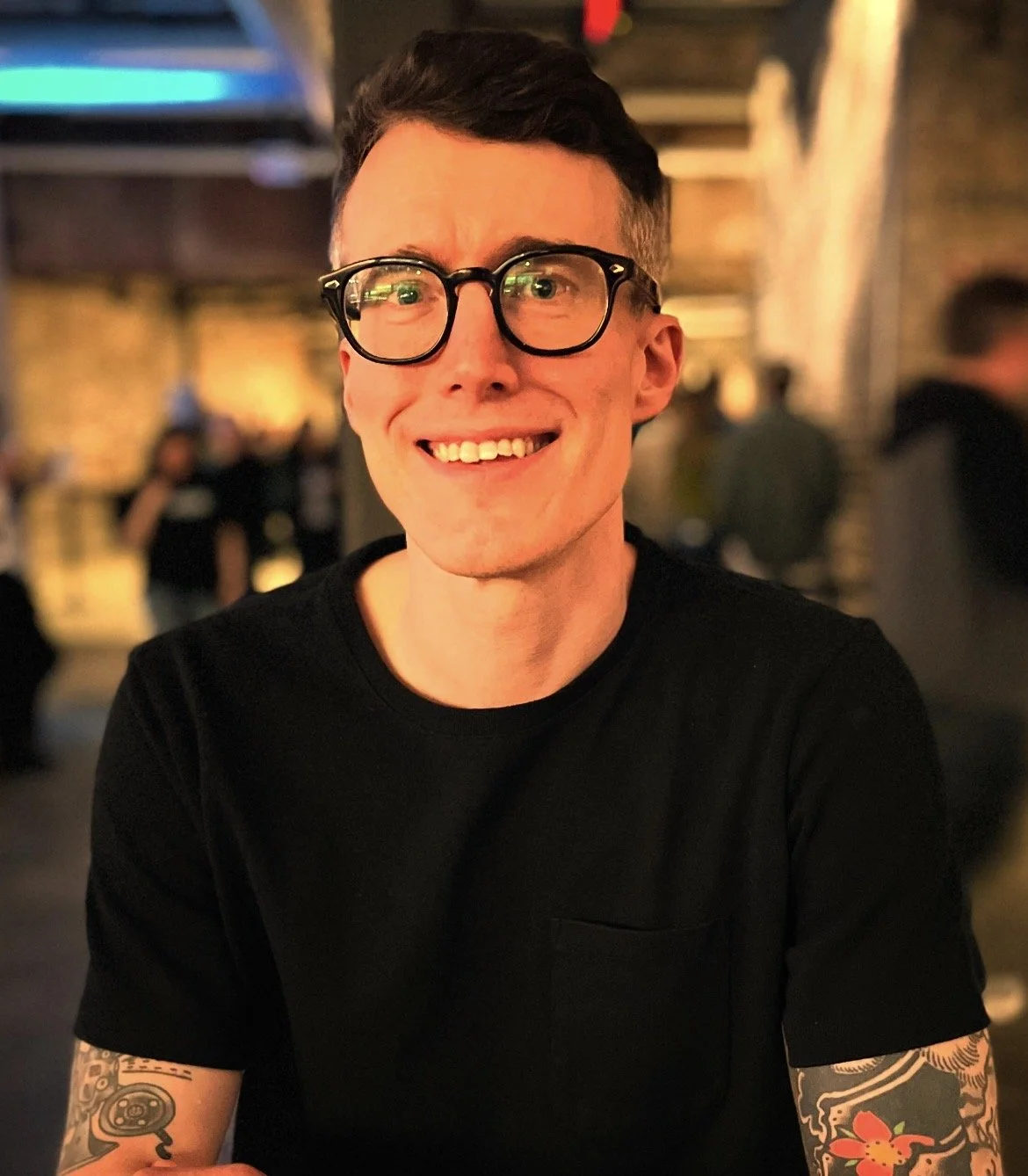
Associate Professor of Film and Media Studies and Chair of the Department of Arts, Film, and Music at Misericordia University
My research examines how documentary media, visual evidence, and emerging media technologies become sites of political struggle and civic action. I am particularly interested in how people living through war, occupation, displacement, incarceration, and repression use images, testimonies, archives, and digital infrastructures to document their experiences, challenge dominant narratives, mobilize publics, and produce political change.
I am the author of Radical Documentary and Global Crises: Militant Evidence in the Digital Age (Indiana University Press, 2021). In the book, I explore the transnational history of radical documentary and use this historical grounding to develop the concept of “militant evidence” to describe how contemporary documentary images, testimonies, and digital archives can function as forms of political intervention. Examining the Iraq War, the occupation of Palestine, the civil war in Syria, mass incarceration in the United States, and child soldier conscription in the Congo, the book traces how activists, amateur filmmakers, and artists transform documentary media into practices of witnessing, archiving, advocacy, and political action. I argue that militant evidence expands conventional definitions of documentary by demonstrating how images and media can be mobilized not only to represent events, but to expose, amass, and adjudicate evidence within ongoing struggles for justice. I discussed the book on the New Books Network podcast with host Gustavo Gutiérrez Suárez.
My current book project, Sites of Resistance: Building Radical Civic Space through Documentary Media, extends my research into the relationship between media, occupation, repression, and political resistance. It asks how communities without formal power use media to resist occupation and repression and assert sovereignty. The project develops the concepts of “radical civic space” and “counter-occupation” to examine how Indigenous and other local communities deploy grassroots media practices to challenge military, settler-colonial, narrative, and digital forms of occupation as well as state repression. Focusing on media practices in Western Sahara, Palestine, Jammu & Kashmir, and Chiapas, the project brings documentary studies into dialogue with Indigenous studies, media infrastructure studies, human rights studies, and media activism. It asks both what the creation of radical civic space can make possible for communities engaged in struggles for sovereignty, solidarity, justice, and revolution, and what political, infrastructural, and technological limitations shape those possibilities.
In 2019, I co-edited a special issue of Studies in Documentary Film on "Radical Documentary in the Globalized Age of New Media" which brought together scholarship on documentary practices emerging from the intersection of radical politics, globalization, and new media.
My writing in journals and edited collections has appeared in Afterimage, Canadian Journal of Film Studies, Critical Inquiry, Feminist Media Studies, Media, Culture & Society, The Velvet Light Trap, and The Intellect Handbook of Documentary, among other venues. A complete list of publications is available on my CV and my Google Scholar page.
In 2022, I won the Louis and Barbara Alesi Excellence in Scholarship Award, Misericordia’s highest research honor.
I teach widely in film and media studies at the undergraduate level. In courses such as Critical Media Studies and Documentary Film and Video, students explore questions of ethics, representation, disability justice, political economy, social justice, and media activism. They examine how images, technologies, platforms, narratives, and algorithms acquire and assert authority and shape reality, how film and media are embedded within infrastructural, technological, and political systems, and how film and media can reproduce or challenge structures of power.
In addition to my scholarly work and teaching, I served as Director of the Center for Excellence in Teaching and Learning (CETL) at Misericordia from 2020 to 2026, where I supported faculty development, pedagogical innovation, and interdisciplinary collaboration across the university.